

How Do I Find My IP Address?
Checking your IP address is very simple. Use our tool from your web browser to display your IP address (IPv4 and/or IPv6), geolocation, and host information.
To check your IP address automatically with a script, use the URL .
To find your IP address manually, while connected to a WiFi network, and open the Network Settings menu. Most devices and operating systems will display your IP address here.
Below are step-by-step instructions on how to manually find your public IP address on popular devices and operating systems:
Windows 10 & 11
Windows 10 & 11
How to check your IP address on Windows 10 and 11:
- Open the “Start” menu, then navigate to “Settings”, “Network & Internet”, and “Wi-Fi”.
- Connect to a WiFi network, then click on the network you’re connected to.
- Scroll down to “Properties.”
- Your IP address and DNS server address will be listed here.
macOS
macOS
How to find your IP address on macOS:
- Open “System Settings”, then “Network”.
- Click on the “Wi-Fi” button.
- Connect to a WiFi network, then select “Details” on the right-hand side.
- Your IP address will be listed here.
iOS & Android
iOS & Android
How to find your IP address on iOS:
- Open “Settings” and tap on “WiFi”.
- Connect to a WiFi network, or tap on the network you’re connected to.
- Your IPv4 and IPv6 addresses will be listed here.
Here’s how to find your IP address on an Android phone:
- Open “Settings” and click “Connections”.
- Tap on the WiFi network you’re connected to.
- Tap on the cog symbol next to your current network.
- Your public IP address will be listed here.
Amazon Fire TV Stick
Amazon Fire TV Stick
How to find your IP address on a Fire TV Stick:
- Navigate to the “Settings” menu and select “OK”.
- Click on “My Fire TV”, then “About”.
- Select the “Network” button.
- You’ll find your IP address listed on the right-hand side.
What Is an IP Address?
An IP (Internet Protocol) address is a unique identifier for each device on a network, such as the internet.
When you connect to the internet, your Internet Service Provider (ISP) assigns you an IP address.
IP addresses allow web-connected devices to find and communicate with each other. Without specific IP addresses, devices wouldn’t be able to send and receive information from each other over the internet.
Another purpose of IP addresses is for location addressing. When a tool like ours detects an IP address, it queries a database (e.g. ARIN) to find the geographical area where the IP address is mapped to. This ‘area’ is known as your IP’s geolocation.
IP address locations are not the most accurate, but they do reveal in which city you appear to be located.
Why Is My IPv4 & IPv6 Address Different?
There are two types of IP address protocols in use: IPv4 (IP4) and IPv6 (IP6).
IPv4 uses a 32-bit address structure, which supports roughly 4.3 billion IP addresses. An IPv4 address typically looks like this: 192.0.2.235.
IPv6 was introduced to solve the IPv4 scarcity problem. It uses 128-bit addresses, which allows for up to 340 undecillion IP addresses. This is what an IPv6 address looks like:
2001:0db8:85a3:0000:0000:8a2e:0370:7334.
If you’re connected to a VPN service while using our tool, you may see different information between your IPv4 address and your IPv6 address.
This is most likely because your VPN is not tunneling IPv6 correctly. This means your real IPv6 address, and all the data associated with it, is still publicly exposed.
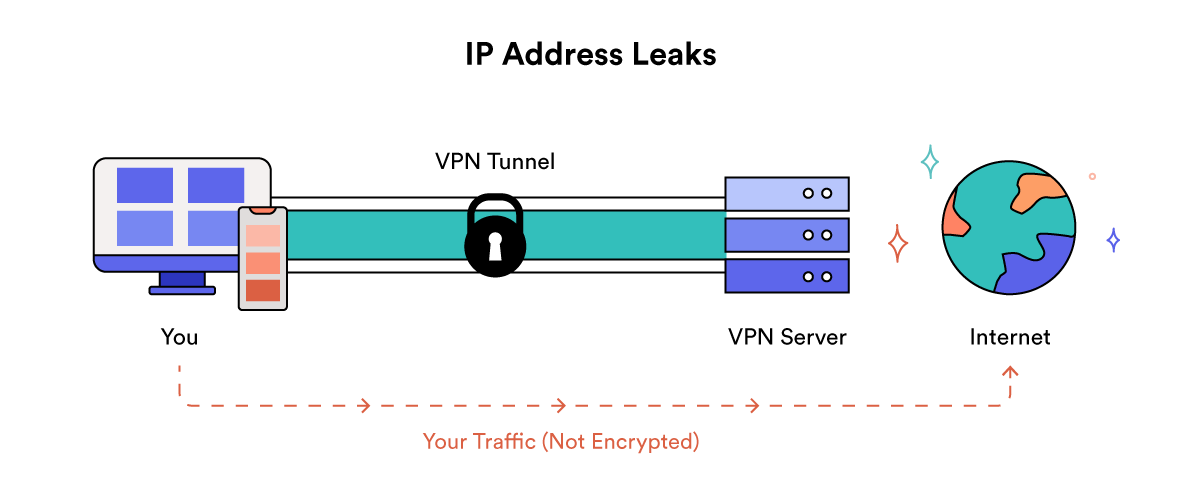
There are two ways to fix your VPN leaking your IPv6 address:
- Check if your VPN has IPv6 leak protection within the app’s settings. If it does, make sure it’s enabled.
- See if your VPN can disable or block IPv6. This is the next best option – your VPN will simply disable your IPv6 connection to prevent leaks, rather than attempt to tunnel it.
If you cannot find either of these options, your VPN cannot fix the problem.
In this case, you can attempt to fix the issue within your device’s network settings by manually disabling IPv6.
We explain how to disable IPv6 on multiple devices in our guide to fixing IP address leaks.
If you have both an IPv4 and an IPv6 address, the latter will likely be your device’s preferred protocol.
In this scenario, you can fix the leak by blocking all IPv6 traffic. Don’t worry, your internet connection will still work since your device will exclusively use IPv4.
How Can I Hide My IP Address?
Your IP address reveals certain information about you. For example, where you’re located (approximately) and what internet-connected devices you use.
Also, your ISP or mobile carrier can track and store your web browsing, watch and download history.
Below is a short list of actions companies and individuals can take once they know your IP address:
- Determine your approximate location. Your IP address reveals your country, city, and sometimes your ZIP code.
- Block your IP address and restrict access to web services.
- Carry out a Denial of Service (DoS) attack. This involves sending huge amounts of traffic to your IP address server, causing the server to crash. When this happens, your internet connection drops.
- Scan for open ports. Hackers can scan open ports to identify your devices’ vulnerabilities to online attacks.
- Doxing. By obtaining your IP address, someone can dox you. This means uncovering your real identity or personal information and releasing it to the public.
- Targeted advertising based on IP address. Businesses can display online ads only targeting specific IP addresses.
We strongly recommend hiding your IP address to be more private and safe while using the internet.
Below are two effective tools that allow you easily change and hide your IP address:
Web Proxy
A web proxy, usually available via a website or web application, allows you to route internet traffic from applications on your device to a proxy server, and then on to your web destination.
Web proxies are typically set up on an application-by-application basis, e.g. via a web browser.
When you connect to a proxy server, your IP address changes to one assigned by the server. This masks your true IP address while using a proxied application, and the websites you visit only see the proxy’s IP address.
Virtual Private Network
A VPN (Virtual Private Network) is a better software version of a web proxy, which you can install and use on most devices.
Like proxies, VPNs divert your internet traffic through a remote private server, which assigns you a different IP address. Websites and apps you use will see the remote server’s IP address.
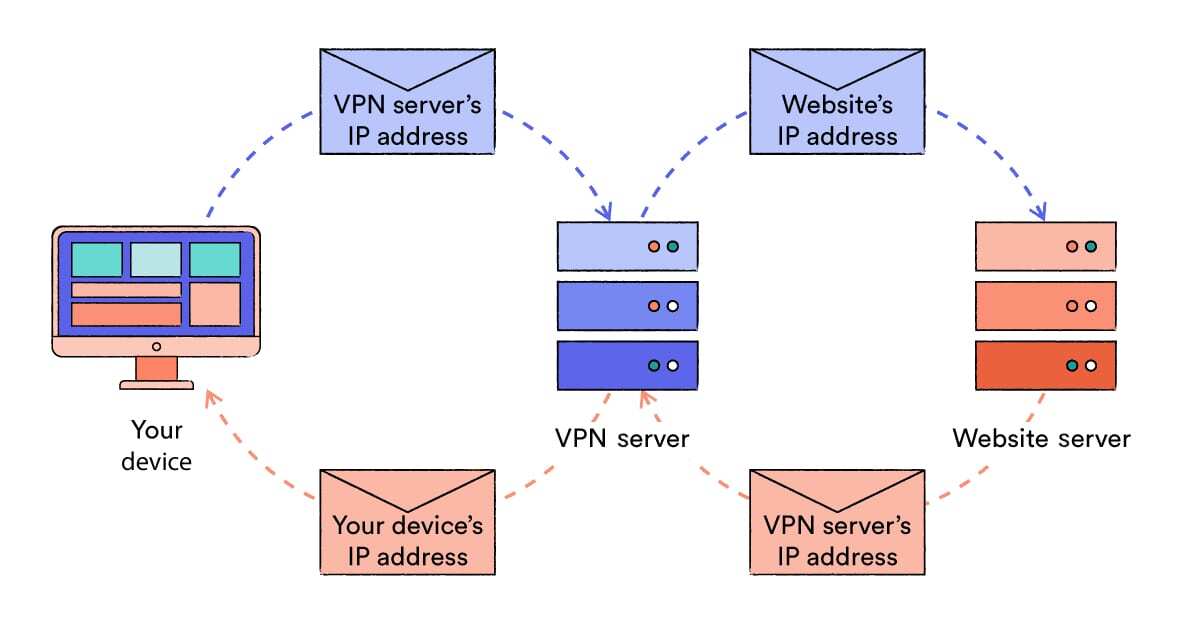
Only the IP address of the VPN server is visible to the website server.
Unlike proxies, secure VPNs use sophisticated connection protocols (e.g. OpenVPN and WireGuard), and encryption (e.g. AES 256-bit and ChaCha20), to further secure your internet data transfers.
Trustworthy VPNs route your internet traffic through a secure VPN server, anonymizing your web activity regardless of which application you’re using.
Finally, VPNs and proxies let you temporarily change your IP address to one belonging to another country or city, which most other methods to change IP address aren’t able to do.
Learn More About IP Addresses
Below is a list of guides to help you learn more about IP addresses: